Practical guidance
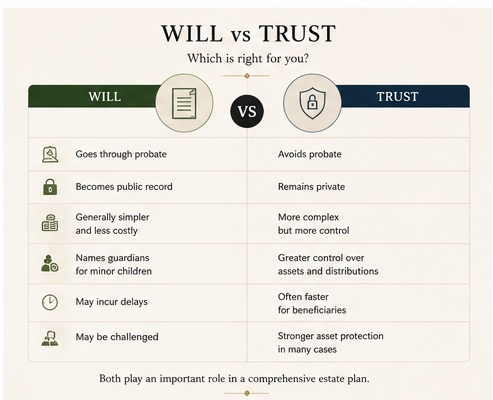
Will vs Trust
Both can play important roles in estate planning. The right approach depends on your assets, family circumstances, goals, jurisdiction and professional advice.
| Topic | Will | Trust |
|---|---|---|
| Purpose | Records how certain matters and assets should be handled after death. | Can hold and manage assets under stated terms during life, after death, or both. |
| When it operates | Generally takes effect after death. | Depends on the structure and when it is created or funded. |
| Control | Can name executors, guardians and beneficiaries, subject to law. | Can provide detailed rules for trustees, beneficiaries and distributions. |
| Administration | May involve probate or another court-supervised process. | May avoid probate for properly transferred assets, but administration remains. |
| Complexity | Often simpler and less expensive to prepare. | Often more complex and may require ongoing management and costs. |
Avoid absolute claims: A trust does not automatically prevent divorce claims, creditor claims, tax, care costs or legal challenges.